JetBlue
- 4.5
- Rating
- 5.00M
- Installs
- Free
- Price

 Analysis by App-foxy
I used JetBlue’s mobile app as a practical travel companion rather than treating it like a simple airline brochure. That distinction matters: the useful test is not whether it looks polished for a minute, but whether it helps me move from searching for a flight to managing the trip without unnecessary friction. JetBlue - Book & manage trips is a free Travel & Local app from JetBlue Airways Corporation, aimed at people who already fly with the airline and want the main journey tasks in one place.
My overall impression is that it makes the most sense when I am already committed to JetBlue. It brings booking, trip management and check-in into the same mobile workflow, so I do not have to keep switching between a browser and separate travel tools. At the same time, it is not a universal travel planner. If I regularly compare several airlines, build complicated multi-airline itineraries or prefer an independent booking service, I would still use another tool for the research stage and keep this app for the JetBlue-specific part of the trip.
How quickly it gets me from planning to boarding
The app’s strongest speed advantage is not necessarily a dramatic visual effect; it is the reduction in small steps. When I want to look for a JetBlue flight, the natural path is already close at hand. After booking, the same app remains relevant for checking the itinerary and preparing for departure. That continuity feels more useful than opening a general travel app for discovery and then moving to a separate airline website for the actual reservation.
You May Also Like

 Blood Strike: 2.5 Anniversary
Blood Strike’s Loadouts Turn Every Drop Into a Tactical Gamble
A close look at Blood Strike’s custom loadouts: how fast access to signature weapons reshapes its battle royale rhythm, rewards preparation, and narrows the gap between fights.

 Pandora - Music & Podcasts
Pandora’s Music Is Easy to Start, but Harder to Recover
Pandora’s strength is its low-effort path from a seed to a station. Its weak spot is how much confidence it asks you to place in connection, setup, and quiet recovery.

 8 Ball Pool
 Is Built on Rivalries, Rematches, and Routine
A close look at the rivalries, rematches, shared routines, and unanswered safety questions that turn a quick pool match into a persistent mobile community.

 Samsung Music
’s Quiet Strength Is Playing What You Already Own
Its reach comes less from spectacle than from dependable access to a personal library. That simplicity is both the app’s strongest retention engine and its ceiling.

 AccuWeather: Weather Radar
AccuWeather Review: A Quick, Clear Forecast for Everyday Decisions
For everyday plans, the best forecast is the one you can understand quickly. AccuWeather makes rain timing, radar, and local conditions easy to act on, with a few trade-offs.

 Hill Climb Racing
Why Hill Climb Racing Still Turns Crashes Into One More Run
A tiny car, a bumpy hill and one more upgrade: Hill Climb Racing keeps resurfacing because its simple chaos makes every near-miss feel personal.
More From Our News Desk
View All News


In everyday use, perceived speed depends heavily on what I am trying to do. A straightforward booking or a quick check of an existing trip should feel more direct than searching through email, browser tabs and saved screenshots. The app is particularly convenient when I already know my route and approximate travel plans. In that situation, I am not asking it to solve a broad travel-research problem; I am asking it to complete a focused airline task.
There is an important trade-off here. A dedicated airline app can be faster for a known carrier, but it is less efficient for comparing the entire market. I would not open this first when I am undecided between JetBlue and several other airlines. A comparison service is better for that initial decision because it puts alternatives together. Once JetBlue is the choice, however, moving into its own app is a sensible next step.
The app has been available since October 18, 2012, and its current version is 9.1.0. That history gives it the feel of an established travel utility rather than a newly launched experiment. I also noticed that the app’s job is fairly focused. It is not trying to replace every part of a vacation, which helps keep the main airline actions understandable instead of burying them under unrelated travel content.
Booking is easiest when the trip is uncomplicated
For a simple one-person or family journey, I would use the app to search, select and keep the reservation accessible in the same place. This is where the mobile format earns its space on my phone. I can begin planning away from a desk and return later to the trip instead of reconstructing the details from messages and browser history.
More complicated travel deserves a slower review before payment. I would carefully check the dates, airports, passenger details and the full itinerary rather than relying on a quick tap-through. That is not a criticism unique to JetBlue; airline bookings are consequential, and a fast interface can make it tempting to move through a decision before confirming every detail. The app helps with convenience, but it does not remove the need for attention.
One useful habit is to treat the app as the place for the final airline workflow, not necessarily the only place for research. I would compare schedules elsewhere if flexibility matters, then use JetBlue’s app once I have narrowed the choice. This two-stage approach avoids forcing one app to perform two different jobs and makes the experience feel faster overall.
Check-in is where mobile access becomes genuinely useful
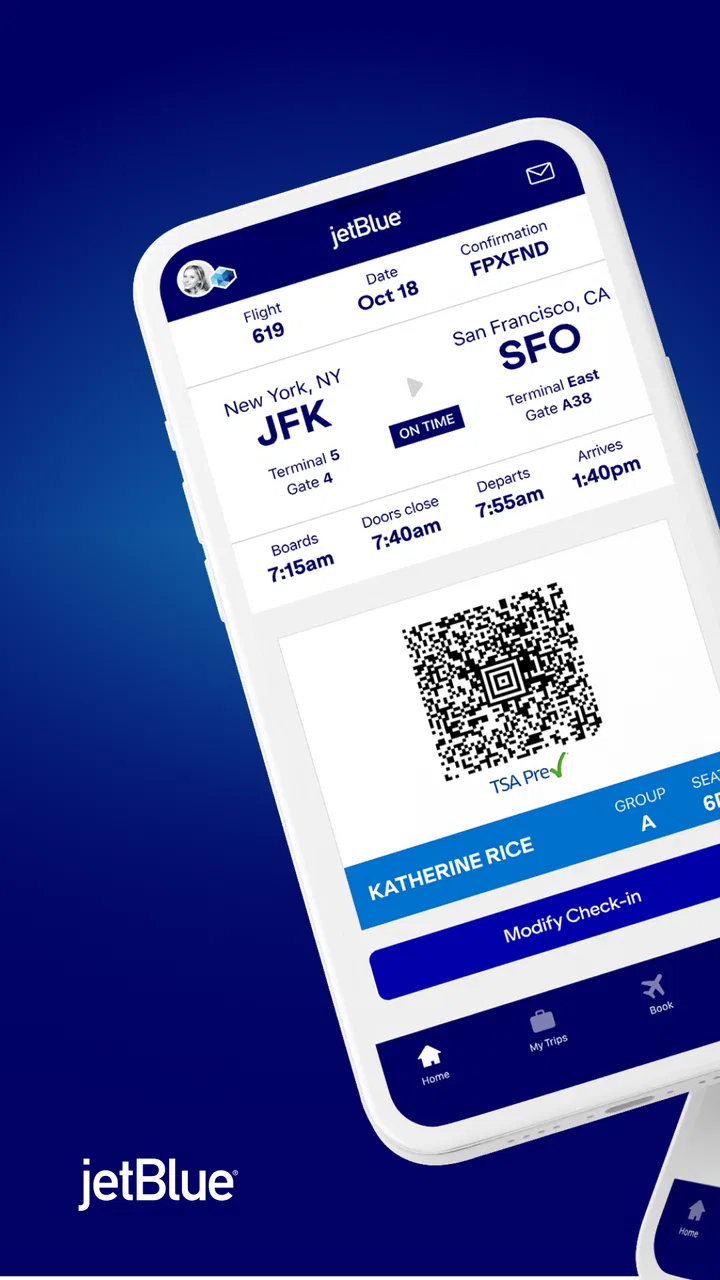
Checking in from a phone is one of the clearest reasons to keep the app installed. Instead of waiting until I am at a computer, I can handle that part of the trip while already traveling or preparing to leave home. The benefit is practical rather than glamorous: fewer things to remember, fewer paper-based steps and a better chance of having the relevant trip information close at hand.
I would still avoid leaving check-in until the last possible moment. A mobile app can simplify the process, but it cannot make a rushed airport situation comfortable. My preferred routine would be to open the trip in advance, confirm that the reservation is the one I expect and complete the available preparation before heading out. That gives the app time to help rather than turning it into another task during a stressful departure.
For a traveler who flies JetBlue only occasionally, the app is still useful around the journey itself. I do not need to become a frequent flyer or explore every screen. I can install it for the booking and check-in cycle, use it to manage that trip, and then decide whether it deserves a permanent place on my phone.
How it behaves during heavy travel moments
Travel apps are judged most harshly when the user is busy, distracted or under time pressure. The calm moment at home is easy; the real test is checking a trip while carrying luggage, moving through a terminal or trying to confirm details during a change of plan. JetBlue’s app is valuable in those moments because it keeps the airline-related workflow together, but I would still prepare before reaching the busiest part of the journey.
My practical advice is to open the app before leaving for the airport and make sure I understand where the current trip is located. That small preparation reduces the mental load later. It is much easier to use a familiar screen when I am walking or listening for announcements than to start exploring the app for the first time in a crowded terminal.
Heavy use can also mean repeated checking. I might open the app once to review the itinerary, again during the journey and later to confirm the next step. A focused airline app is well suited to that pattern because I am returning to one specific trip rather than rebuilding a search each time. The experience is less about long sessions and more about quick, purposeful visits.
A realistic airport-day routine
Imagine I have booked a JetBlue flight several days ahead, then reach the morning before departure with a busy schedule. I would open the app to revisit the reservation, check the trip details and complete check-in when appropriate. On the way to the airport, I would use it as the central reference for that booking instead of searching through old email. At the terminal, the value is not that it replaces every airport process; it is that the airline portion of my preparation is already organized.
If my plans change, I would go directly to the trip-management area rather than beginning a new search. That is a small but important workflow distinction. Starting over can create confusion between a new quote and the reservation I actually own. Keeping the original trip in view helps me think about the change as an adjustment to an existing journey.
I would also avoid depending on any travel app as my only memory. I prefer to keep essential reservation details available through the normal channels I use and to know my flight information before arriving. The app is a strong convenience layer, but good travel preparation still includes a little redundancy, especially when timing matters.
Where the app may feel less efficient
The main limitation appears when my needs become broader than JetBlue. I cannot use a carrier-specific app as a neutral dashboard for every airline I might take. If I am coordinating different carriers, trains, hotels and local transport, a general itinerary organizer may give me a more complete picture. In that case, JetBlue’s app can remain useful for its own reservation, but it should not be the only travel tool.
Another possible friction point is the difference between a quick task and a complicated booking decision. The app is naturally appealing when the route is clear. When I need to compare many dates, weigh several carriers or think through a complex group itinerary, a larger screen and a broader search service may be more comfortable. I would rather use the app for execution than force it to be my entire planning desk.
That distinction also affects perceived performance. An app can seem fast when it handles a focused request and slower when I ask it to support a long, complicated decision. In my view, JetBlue’s mobile value is strongest in short sessions: book a known flight, open a trip, prepare for departure or check in. It is not designed around the same purpose as a full travel marketplace.
Reliability and recovery when plans become messy
Reliability in travel is more than opening the app successfully. I want to return to the correct trip, recognize what I am looking at and recover easily if I leave a screen or lose my place. JetBlue’s focused design helps with that basic mental model because the app is centered on the airline relationship rather than a huge collection of unrelated services.
The app has a 4.5 average from around 98 thousand ratings, with roughly 17 thousand written reviews. Those figures suggest that many travelers find it useful, while the existence of a substantial review conversation also reminds me that no airline app feels perfect for everyone. I read that broad reception as encouraging, not as a guarantee that every booking or check-in session will be effortless on every phone and connection.
When something does not go smoothly, my first recovery step would be simple: stop repeating taps, return to the trip area and verify whether the action actually completed. This matters with reservations and check-in because impatiently submitting the same request can create uncertainty about the current state. A deliberate pause is often more useful than treating every delay as a failed transaction.
I would also keep the app updated. The current version is 9.1.0, and staying on the available version is a sensible way to avoid problems caused by an outdated installation. That does not guarantee perfect behavior, but it is a basic maintenance step I would take before an important journey rather than discovering the need for it at the airport.
What I expect from stability
JetBlue’s app has passed the early stage of being an untested newcomer. It has been around for years and has reached more than five million installs, which gives me reasonable confidence that it is intended for regular, real-world travel use. I would describe that as a positive sign of maturity, while still keeping expectations realistic: network conditions, account issues and airline operations can affect the experience beyond the app itself.
For recovery, the most important practical choice is preparation. I would open the app while I have time, not only when a deadline is approaching. If a screen needs another attempt or I need to understand a trip detail, I would rather solve that at home or on a stable connection than while boarding is imminent. The app supports a better process, but it cannot compensate for leaving every travel task until the final minute.
This is also why I would not judge the app solely by how quickly it launches. A stable return to the right reservation is more valuable to me than a flashy opening screen. In travel, confidence comes from knowing what action I am taking and what the app has already recorded, especially when I am managing an existing booking rather than casually browsing.
Device demands and who should install it
The listed minimum operating-system requirement is Android 8.0, so the app is accessible to people using older Android devices that still meet that baseline. That is helpful for travelers who do not replace their phone frequently. I would still check that my phone has enough free space, a functioning connection and a battery plan before relying on it during a trip, because those everyday conditions often matter more than the app’s category label.
As a travel utility, it should not need to dominate my phone’s attention throughout the day. I would install it when I have a JetBlue booking or expect to make one, use it for the relevant travel tasks and avoid leaving it open unnecessarily. That approach suits people who prefer a focused tool rather than a permanently active travel dashboard.
The app is rated for Everyone, which fits its practical purpose. Families can use it as part of trip preparation, although I would still have the person responsible for the booking review every detail before confirming anything. A simple age rating does not replace adult oversight when the action involves dates, passengers and travel commitments.
For iPhone users, the same basic decision applies: the app is worthwhile if JetBlue is a meaningful part of the trip. For Android users, the minimum requirement makes it a realistic option on a range of devices, provided the phone is supported and maintained. In either case, I would not install it merely because I want a general-purpose travel organizer; its value comes from its direct connection to JetBlue journeys.
Who benefits most, and who should choose something else
I would recommend it to regular JetBlue customers, people booking a known JetBlue route and travelers who want one place for booking, trip management and check-in. It is also a good fit for someone who dislikes relying on a browser during a journey and prefers returning to a dedicated mobile interface.
I would be more cautious if I were an occasional traveler comparing every airline, arranging a multi-carrier itinerary or trying to manage hotels and ground transportation in one view. A general travel app or browser-based comparison tool would be better for those jobs. I could still use JetBlue’s app after choosing the airline, but I would not expect it to replace the broader service.
The app is free, which removes the usual cost barrier to trying it. That does not mean every traveler needs it permanently. If I fly JetBlue once and already have a comfortable booking workflow, I might install it for that trip and remove it afterward. If I fly the airline often, the convenience of having the airline’s core mobile tools ready becomes more persuasive.
My performance verdict after weighing convenience against limits
JetBlue - Book & manage trips succeeds because it concentrates on the moments when a JetBlue passenger needs direct access: choosing a flight, returning to an existing trip, preparing for departure and checking in. I find it most effective when I use it as a focused operational tool rather than a complete travel-planning universe. That narrower role is a strength, not a flaw, as long as I understand what I am installing.
Its perceived speed should be best in short, familiar workflows, while complicated comparisons are better handled elsewhere. During heavy travel moments, preparation makes the biggest difference: open the trip early, understand the path to check-in and avoid waiting until the airport to learn the interface. For reliability, the app’s long availability, current version and broad adoption are reassuring, but I would still keep sensible backup habits for important travel information.
The three less-obvious lessons I take away are these: use a comparison tool before committing when several airlines are in contention; treat the app as the control center for an existing JetBlue reservation rather than repeatedly starting searches; and test your travel workflow before departure so recovery does not happen under pressure. Those habits make the app feel substantially more useful than simply installing it and hoping it will solve everything at the terminal.
My recommendation is straightforward: if JetBlue is your airline, I would install this free app and use it for the complete mobile journey from booking through check-in. If your travel life is spread across many airlines and services, choose a broader organizer first and keep this as a companion for JetBlue-specific tasks. It is not the right tool for every traveler, but for the person it is built around, it offers a sensible, focused and generally dependable way to keep a flight within reach.
FAQs for JetBlue
01What features does the JetBlue app offer?
The JetBlue app offers a range of features designed to enhance your travel experience. You can book flights, manage existing bookings, and check in for your flight. Additionally, the app provides real-time flight status updates, allows you to track your TrueBlue points, and offers easy access to boarding passes.
02Is it possible to manage my TrueBlue account through the JetBlue app?
Yes, the JetBlue app allows you to manage your TrueBlue account with ease. You can check your points balance, view your activity history, and even redeem points for flights. The app provides a convenient way to stay updated on your rewards and maximize your travel benefits.
03Can I use the JetBlue app to check in for my flight?
Absolutely, the JetBlue app offers a seamless check-in process. You can check in for your flight 24 hours before departure and access your mobile boarding pass directly through the app. This feature saves time and reduces the hassle of dealing with paper tickets at the airport.
04Does the JetBlue app support real-time flight tracking?
Yes, the JetBlue app includes real-time flight tracking features. You can monitor the status of your flight, receive notifications about any changes, and adjust your plans accordingly. This ensures that you have the most up-to-date information about your travel itinerary.
05Is the JetBlue app available for both Android and iOS devices?
The JetBlue app is available for both Android and iOS devices, ensuring broad accessibility for users. You can download it from the Google Play Store for Android devices and the Apple App Store for iOS devices. This cross-platform availability ensures that all JetBlue passengers can take advantage of the app’s features.
Pros
- Intuitive interface for easy booking.
- Real-time flight status updates.
- Quick access to boarding passes.
- Customizable travel preferences.
- Integrated support chat feature.
Cons
- Limited international flight options.
- Occasional app crashes reported.
- Lacks detailed airport maps.
- Infrequent loyalty program updates.
- Seat selection can be glitchy.

JetBlue
Gallery